


Nika Sandler works across photography, AI, and text, and has built a practice organized around what can’t be seen through human eyes alone.
Born in Moscow and trained at the Docdocdoc School of Modern Photography, she began making work in 2020. The work that followed, moved between the body and the archive, pleasure and its limits, and the thin membrane between human and non-human perspectives.
She is a winner of the Small File Photo Festival organized by The Photographers’ Gallery, and her work has been widely published in i-D, Dazed, Der Greif, PhMuseum, Metal, and other outlets.
In our conversation, we discussed what depressive hedonism has to do with image generation, the atomization of income streams, and AI, photography, and human memory as distinctly unique time-keeping systems.
DE: You call yourself a “nonhuman agent” and your work keeps returning to the idea of a gaze that isn’t human, be machine vision, or cat vision, or even the fossil record as image. In The Ancient Depths, are you trying to access that non-human perspective? I’m curious whether AI gives you something genuinely outside of yourself, something strange and unexpected, or whether you find yourself constantly steering it back toward what you already know you want.
NS: I think I move between both positions at once: a desire to access a non-human perspective, and a deep skepticism that it can ever truly be reached.
In The Ancient Depths (2024), I was thinking a lot about images that precede or exceed human vision, whether that’s the fossil record, geological strata, mineral formations. These are not images for us, and yet we insist on reading them visually. There’s something almost paradoxical in that gesture.
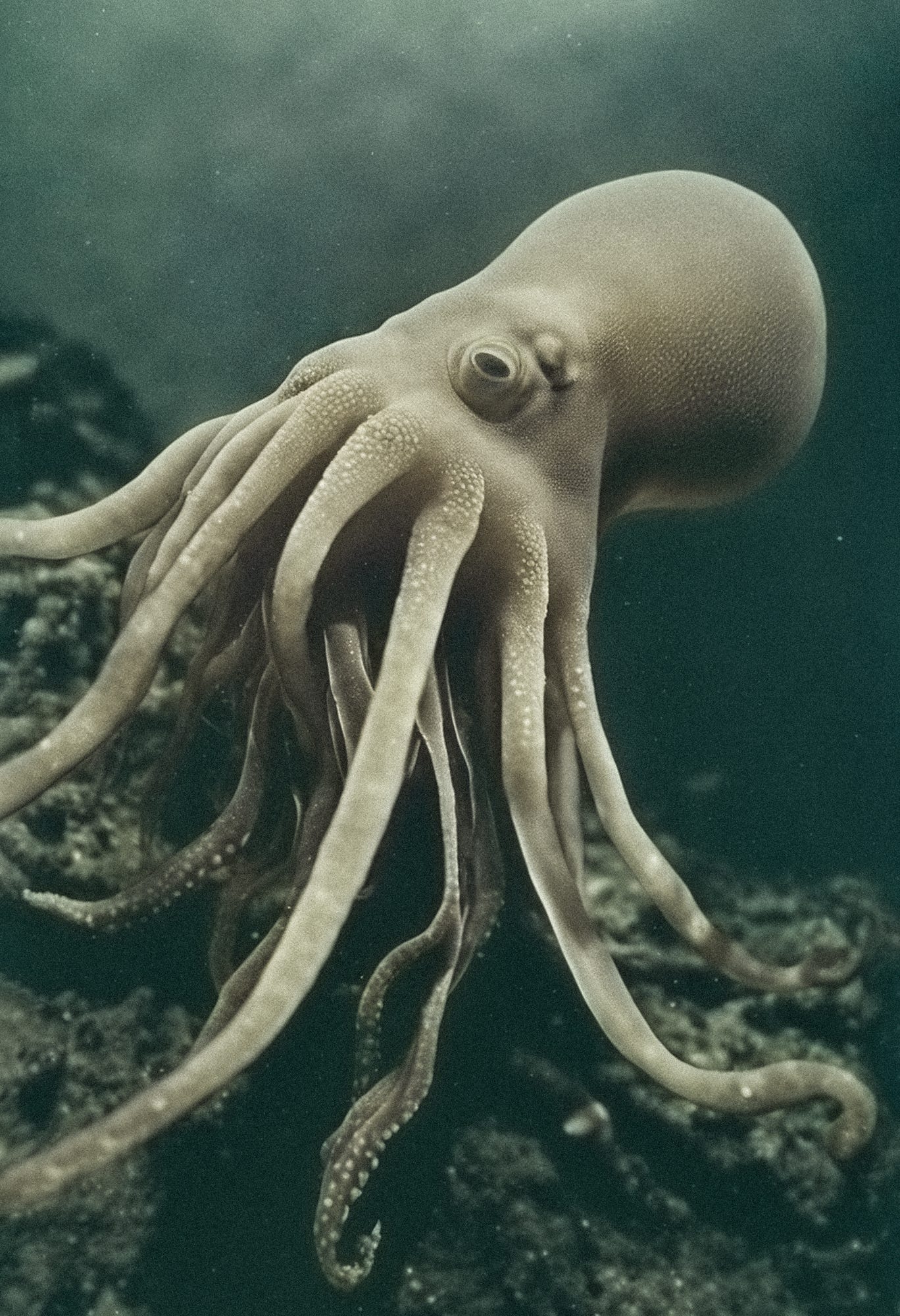
AI enters this space in a very ambiguous way. On one hand, it does produce something genuinely strange because it reorganizes human visual culture at a scale and speed that exceeds individual intention. There are moments where the image feels slightly misaligned with expectation, as if it’s slipping away from recognition.
But at the same time, I’m very aware of how much I am steering it. The process is full of subtle control and oversight. So the “strangeness” is never pure. It’s always entangled with my own desires, references, and constraints.
In that sense, AI doesn’t give me access to a non-human gaze, but it does create a kind of distance from my own. And that distance is productive. It allows me to encounter something that feels partially alien, even if it is still deeply human at its core.
I’m curious how you think about this from your side. Do you see “nonhuman” perception as something we can meaningfully approach through artistic practice, or if it functions more as a conceptual horizon that we keep circling but never reach?
DE: A couple of thoughts here: I recently wrote about the difference between human time-keeping and machine time-keeping, as it pertains to my practice, for photographies recent issue. I cite Dean Buonomano research, which argues that our perception of time is not linear nor objective, but constructed by the brain through distributed neural systems that work across timescales. Suggesting that the present moment is a recursive process that’s constructed by memory, anticipation, and perception. Unlike the mechanical clock or even film’s 24 frames per second, biological time is elastic.
So, with my series, An Incantation in Twelve Prompts (2023), I think through and play with different kinds of time-keeping, as a kind of ritual and commentary on these different modes.
What you’ve said about the geologic as a visual representation makes me think of deep-time, which is what, I think, you’re getting at with that work. How do we understand our planet, or the solar system, outside of cameras and other kinds of data collection. How even that data is still only a snapshot of knowledge. And the term snapshot references the camera/vision.
To answer your question about non-human perception as a strand of my creative practice: that’s an eloquent way to put it, although I don’t know if I’ve ever classified my work in those terms specifically. I will say that I like to think of what can not be photographed, what is outside the frame conceptually, and then set out to try and capture it visually. Which is more like cameraless perception than non-human perception. I think about getting outside of myself often, but never think that would be non-human, specifically, but non-Danielle.
All of this makes me think of James Bridle’s Ways of Being. Have you read this book? I imagine you must have.
NS: I love how you’re framing this concept over time, especially the distinction between the biological, the mechanical, and what you describe as the “timelessness” of AI. This resonates with how I’ve been thinking about images, but from a slightly different angle.
I’m drawn to something almost indifferent to perception, a scale on which time simply unfolds beyond any experiential framework. In that sense, deep time isn’t just difficult to represent; it resists being felt. Maybe that’s why I’m interested in these “non-images.” They’re not only outside of human vision but also outside of human temporality.
Your idea of “cameraless perception” has really stuck with me. It feels like an important shift from trying to adopt another kind of vision to questioning the conditions of visibility itself.
I think AI complicates this further. If it operates in a kind of flattened, timeless system, as you suggest, then its images are also detached from duration. They don’t accumulate time the way photographs do; they don’t capture a moment that has passed. Instead, they feel more like surfaces without history, even though they are built from vast archives of it.
Perhaps that’s where something interesting occurs: the tension between the illusion of immediacy and the weight of everything absorbed into the system.
I haven’t read Ways of Being yet, but it’s been on my list for a while, particularly because of its approach to intelligence as distributed across different forms of life and matter. This concept feels very close to the questions we’re exploring here.
DE: Yea, I think you’d enjoy it.
Your World of Hedonia (2021) series is explicitly in conversation with Fisher’s idea of depressive hedonism, or the way capitalism captures pleasure and hollows it out.
That framework feels directly relevant to how AI is being rolled out right now. Do you think about your practice in those same terms? Like, is there something about working with AI that risks reproducing the same logic you were critiquing, or does it feel different to you?
NS: Yes, I think the connection is very real, and also quite uncomfortable.
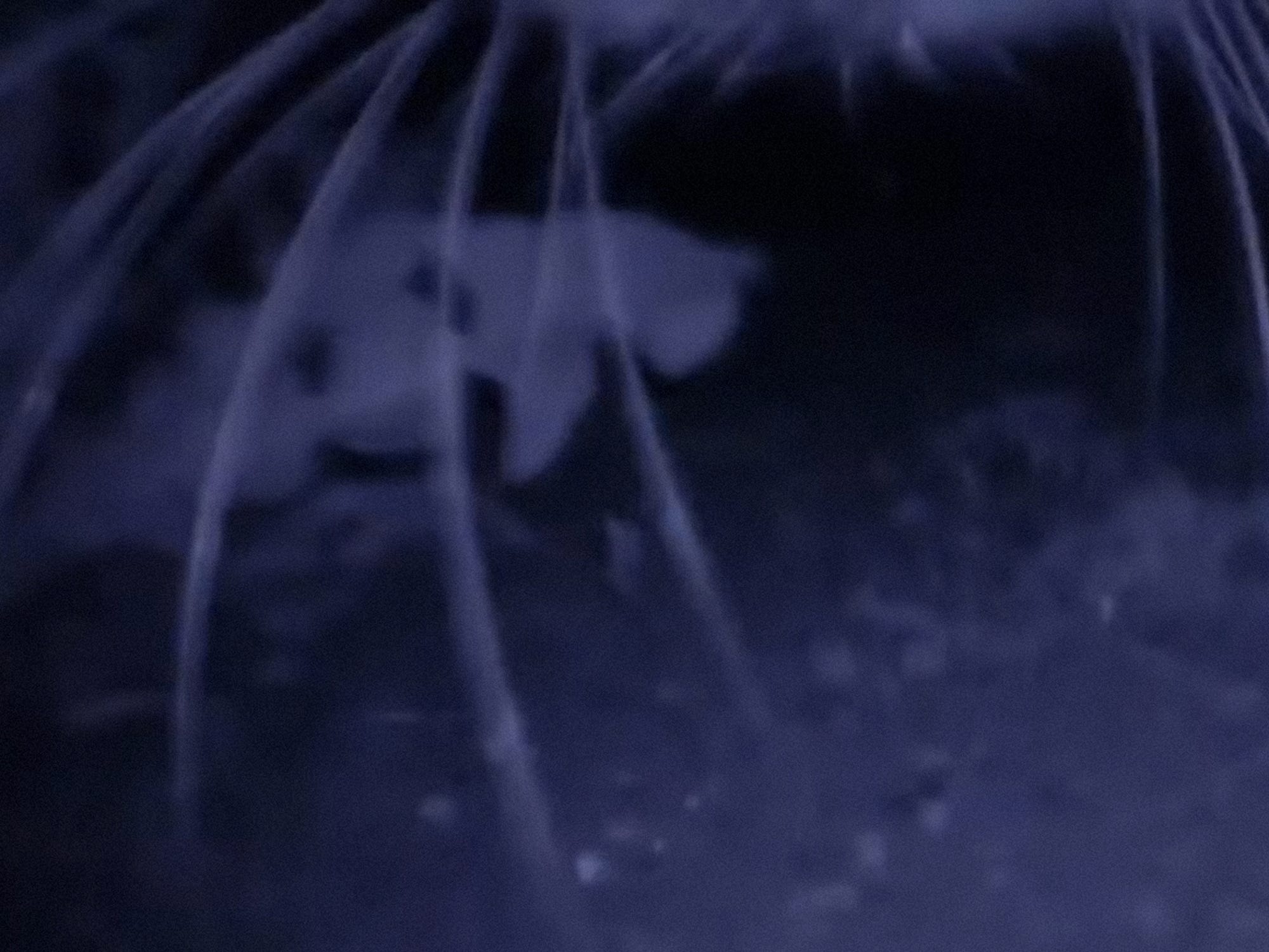
When I was working on World of Hedonia, I was thinking through this idea that pleasure under capitalism becomes flattened. It’s no longer something that transforms you, but something that keeps you in place. A kind of suspended state.
AI can absolutely operate within that same logic. The immediacy of image generation, the endless flow of visual output. It risks becoming another form of passive consumption, even for the artist. I’m quite cautious about that in my own practice. There is always a temptation to follow the system’s logic: to optimize, to produce more, to respond to what “works.” And in that way, AI can reproduce the very structures I was trying to critique. However, I don’t experience it as entirely closed.
What makes it different for me is the possibility of slowing it down, or misusing it. Approaching it not as a tool for efficiency, but as a space for friction. I’m interested in pushing it toward ambiguity, toward images that are not immediately consumable or pleasurable.
If the idea of depressive hedonism is about being trapped in a loop of shallow satisfaction, then I’m trying to use AI in a way that resists that loop, even if that resistance is fragile and incomplete.
DE: Shallow satisfaction, right. I appreciate you acknowledging how resistance itself is not always black and white. I do think that working in a frictionless way, even if you are attempting to interrogate the medium, changes how you work and think through creative problems. Can you point to behaviors in the studio that have benefited or been challenged by this new way of working?
NS: One of the most immediate changes I noticed was a shift in how decisions happen. When working with AI, I often feel a kind of internal pressure to keep moving, to generate, select, refine, repeat. It creates a rhythm that can become almost automatic, where recognition starts to replace a slower way of seeing.
In my earlier process, mainly for projects such as The World of Hedonia and My Nonhuman Friends, I worked with constructed still lives, carefully arranging physical objects to build a narrative. This process was very tactile and time-based. I would spend long periods adjusting small details, the position of an object, the way light falls across a surface, the relationships between textures.
There was always some form of resistance in that process. Materials didn’t behave exactly as intended, compositions would take time to resolve, and often the image only emerged gradually through repetition and minor adjustments. That slowness and unpredictability shaped how I stayed with the work and how decisions unfolded.
With AI, I’ve realized that this kind of resistance doesn’t exist unless I introduce it myself.
So I’ve developed small ways of doing that. For instance, I might generate a group of images and then step away from them for several hours, or a day, before looking again. Sometimes I deliberately limit how much I produce in one session, because otherwise the process starts to blur into a continuous stream where nothing fully settles.
I’ve also observed a transformation in how authorship feels. By this, I mean the experience of making and deciding where the work actually takes form. In a physical process, authorship was closely tied to constructing the image: building the scene, working through its constraints, and arriving at something through sustained attention.
However, with AI, that process becomes distributed. The image can appear very quickly, and often in multiple variations, so the emphasis shifts toward selection, deciding which image to stay with, which direction to follow, and when to stop. In that way, authorship feels more like navigating a field of possibilities.
What becomes harder, for me, is staying with a single image long enough. There is always the possibility of another variation or another version. That constant availability makes commitment feel fragile.
At the same time, I’ve opened myself up to forms that I wouldn’t have arrived at otherwise. Even within a constrained system, something unexpected can emerge, and I try to remain receptive to it.
DE: You’ve been selling work as NFTs across several platforms while also publishing in editorial contexts for i-D, Dazed, Der Greif. Those are pretty different economies with different logics. Part of wanting to have conversations with artists in this format was to understand how they set up their practice in a way that feels sustainable for them, and what choices are required to do so. I’m curious what your actual experience has been navigating both and your intention behind each? Have those choices enabled or curtailed your practice in any way?
NS: For me, these different contexts are less about choosing one economy over another, and more about navigating between them. Sometimes strategically, sometimes quite intuitively, depending on the moment and the work itself.
Editorial platforms like i-D, Dazed, or Der Greif offer a certain kind of visibility and critical framing. When my work appears there, it feels like it enters into a broader conversation. It’s not just seen, but interpreted, situated, and read in relation to other practices. That kind of context is very important to me.
NFT platforms, on the flip side, opened up a different possibility, primarily in the beginning. By this I’m referring to the early phase of the space, around 2020–2021, when it still felt relatively open and less structured.
At that time, I experienced a real sense of immediacy. I could share work directly, without going through the same layers of mediation, and there was a feeling that something could circulate more freely. The relationship with collectors also felt more direct and personal, which was new for me.
Over time, though, that atmosphere shifted. The space became more saturated, and increasingly shaped by speculation and market dynamics. That initial openness started to narrow, and the experience of being there changed with it.
At the very least, both contexts come with their own limitations. The editorial world can be slow and selective, and often doesn’t provide financial stability. The NFT space can be volatile, trend-driven, and difficult to rely on over longer periods of time.So for me, it’s not that one enables and the other restricts. They both do both, just in different ways.
In terms of sustainability, it’s still very much an open question. I don’t feel like I’ve resolved it. It’s more of an ongoing negotiation.
DE: I think this is true of many artists right now, that sustainability is dependent on a piecemeal approach. Each platform is its own microcosm, and has its own interests, advantages, and shortcomings. My concern here is not that it’s piecemeal, but that over time, each strand of income or track for participation becomes more atomized. Ultimately, leaving the artist to increasingly fend for themselves. A diminishing of returns, where the physical work you do to be seen holds less value over time.
On its surface, you could say that the agency and the autonomy of the artist is ever-more in their own hands. They can shape their career in whatever ways they see fit. Lovely, sure. But there is no responsibility of the public, or the consumers of cultural capital, be it tech companies or other institutions, to support the producers of said capital with a livable wage. That’s the thing that sticks with me as I get older. If culture truly needs us artists, there must be a viable way to sustain ourselves that is also humane, life affirming.
Maybe that’s just the unfortunate side-effect of unfettered capitalism. Humanity is not part of the equation long-term.
I saw on X the other day Kyle Chayka talk about how AI companies should contribute some of their profits into basic income for visual artists and I tend to agree. If they have no intention of stopping the data extraction, and are, in many ways, dependent on what we feed their models, the least they could do is pay our rent.
NS: I feel a strong sense of alignment with what you’re describing, and I recognize it very directly in my own experience.
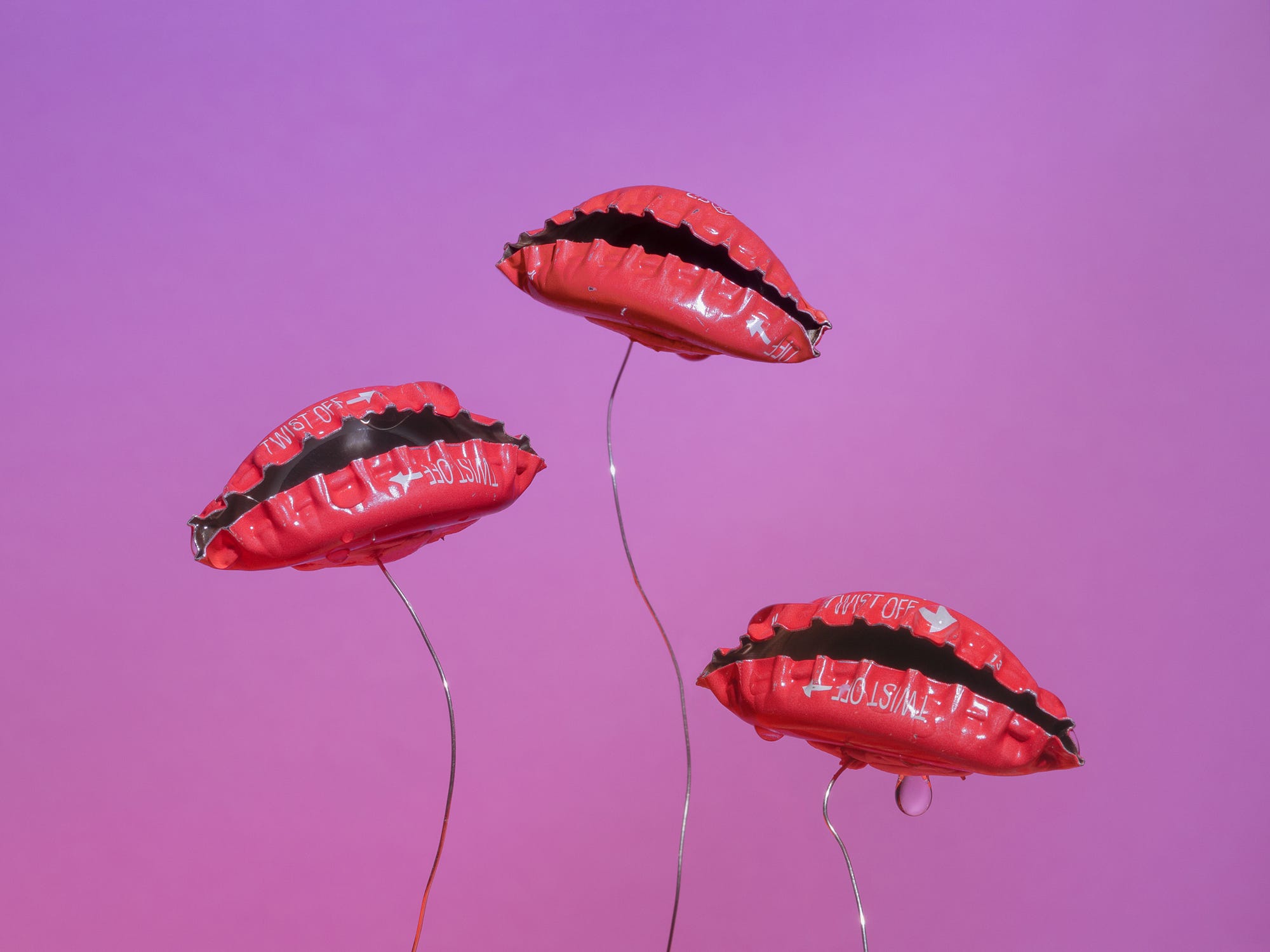
For me, this atomization often shows up in very practical ways: I can spend one part of the day editing or developing a body of work, and the other part writing emails, preparing submissions, organizing files, or adapting the same project for different platforms, each with its own expectations and formats.
Sometimes it feels like the work itself becomes fragmented in the process. A single project has to exist simultaneously as an artwork, a submission, a post, a portfolio, a caption, and each version requires a slightly different language.
I also notice this in how visibility functions. There are moments where maintaining my presence online, whether that’s updating platforms, staying active, responding to comments, starts to take as much energy as the work itself. And that shift can be difficult to navigate.
At the moment, none of these systems fully sustain the practice on their own. So moving between them is a necessity.
Over time, this has created a strange imbalance. The work generates value whether that’s cultural, aesthetic, and sometimes economic, but that value doesn’t really return in a way that supports the conditions needed to keep working. I feel this quite concretely: in the gaps between projects, in the uncertainty of income, in the amount of invisible labor that is required for each image.
Because of that, the idea that artists should simply adapt more feels insufficient. In my experience, there is already a constant state of adaptation. The pressure to absorb even more of that weight tends to fall on the individual practice, rather than being addressed structurally.
That’s why I find the idea of AI companies contributing to a basic income for artists compelling. As an acknowledgment of the imbalance, particularly given how much these systems depend on existing bodies of work.
I also feel that if cultural production is considered valuable and necessary then the conditions that allow it to exist should be livable, not extractive.
DE: What do you see as an ideal path forward to make your practice sustainable, but that also serves the work?
NS: Ideally, it would involve fewer but steadier forms of support, whether through commissions, publications, or long-term collaborations, so that I’m not constantly dividing my attention across too many systems at once.
I also believe sustainability is closely tied to maintaining a certain pace. If the process becomes too accelerated or too fragmented, the work starts to lose something essential. Therefore, part of it is simply protecting the conditions that allow for concentration and depth.
In that vein, I find the concept of a basic income for artists compelling. Having a baseline level of support would enable me to focus more consistently on the work itself instead of constantly navigating between survival and production.