

Rare and Remarkable Blooms
A Conversation with Gregory Eddi Jones

Gregory Eddi Jones and I have been in each other's orbit for over a decade, crossing paths through the overlapping worlds of art, photo criticism, and the kind of slow, but sustained conversations that unfold when two people share a genuine curiosity for the same ideas.
Long before we worked together at Fellowship Trust, I sent him my thesis research after discovering his publication In the In-Between (RIP), which documented photographic and media artists grappling with the technologies and concerns of the 2010s. Gregory is a talented image-maker, writer, and editor in his own right, and the founder of Eddi Jones Projects.
In our conversation, we talk about creative hiatus, making art in a content-saturated world, and what it means to choose invisibility in an era that rewards constant output.
DE: In Notes from the Drift, you compare AI’s efficiencies to fast food replacing the drive-in. You also say that you’re choosing “invisibility over participation.” Can you speak to that more? What does invisibility provide you that participation can not?
GEJ: Notes from the Drift is a new column I’ve started writing for Dear Dave, for the publication’s new Dave of the Week Substack. I’ve been on something of a creative hiatus over the past few years, and I’m using the column to sort of reflect on this hiatus as it relates to the rapid emergence of AI image generators and what they mean for photography.
When I wrote about choosing invisibility over participation, I was speaking about content culture and the professional requirement to be consistently ‘seen’ online. We are already so overburdened by junk content in these cultural channels like Instagram, and AI tools have just expedited the production of it by so much more, that when I think about adding something to that pile, it feels like I’m somehow endorsing it.
It’s not that I fully avoid it, because to some extent, you have to remind your friends and colleagues that you’re still there. But venturing toward invisibility to me means venturing toward both defiance and peacefulness.
DE: Right - there’s a quiet grief in the essay, a nostalgia not just for older technologies, but for the labor of photography itself. Much of your work has dealt with appropriated images, which were already removed from the capture process. Do you miss the physical struggle of making images, or do you think what you’re really mourning is the sense of meaning that used to come with that effort?
GEJ: At the moment, I don’t particularly miss making images, be it a physical process or a clever cerebral one. The sense of meaning that comes with making work, I think, is often transitory. It’s required for the making, because you have to really believe in what you’re doing. For me, that sense of making often dissipates gradually after a project is complete. A project that is 1, 3, 5, or 10 years old becomes less a burning curiosity and more a marker of how an artist interfaced with the world at that time.
If I’m mourning anything, it’s perhaps a younger version of me that had absolute tunnel vision for art making and the personal glory I sometimes felt when I discovered something new in the studio. But priorities change with time. I’m probably not done making art, but at the moment I don’t necessarily feel like there’s anything that’s worth making (for me).
DE: You write about standing on the shore, watching the waves rather than swimming. What does “getting back in the water” actually look like for you now?
GEJ: Last fall, I heard a really interesting saying from one of those old Greek Philosophers that goes something like: “No man ever steps in the same river twice, because it’s not the same river, and he’s not the same man.”
So to be completely vague, the idea feels something like that.
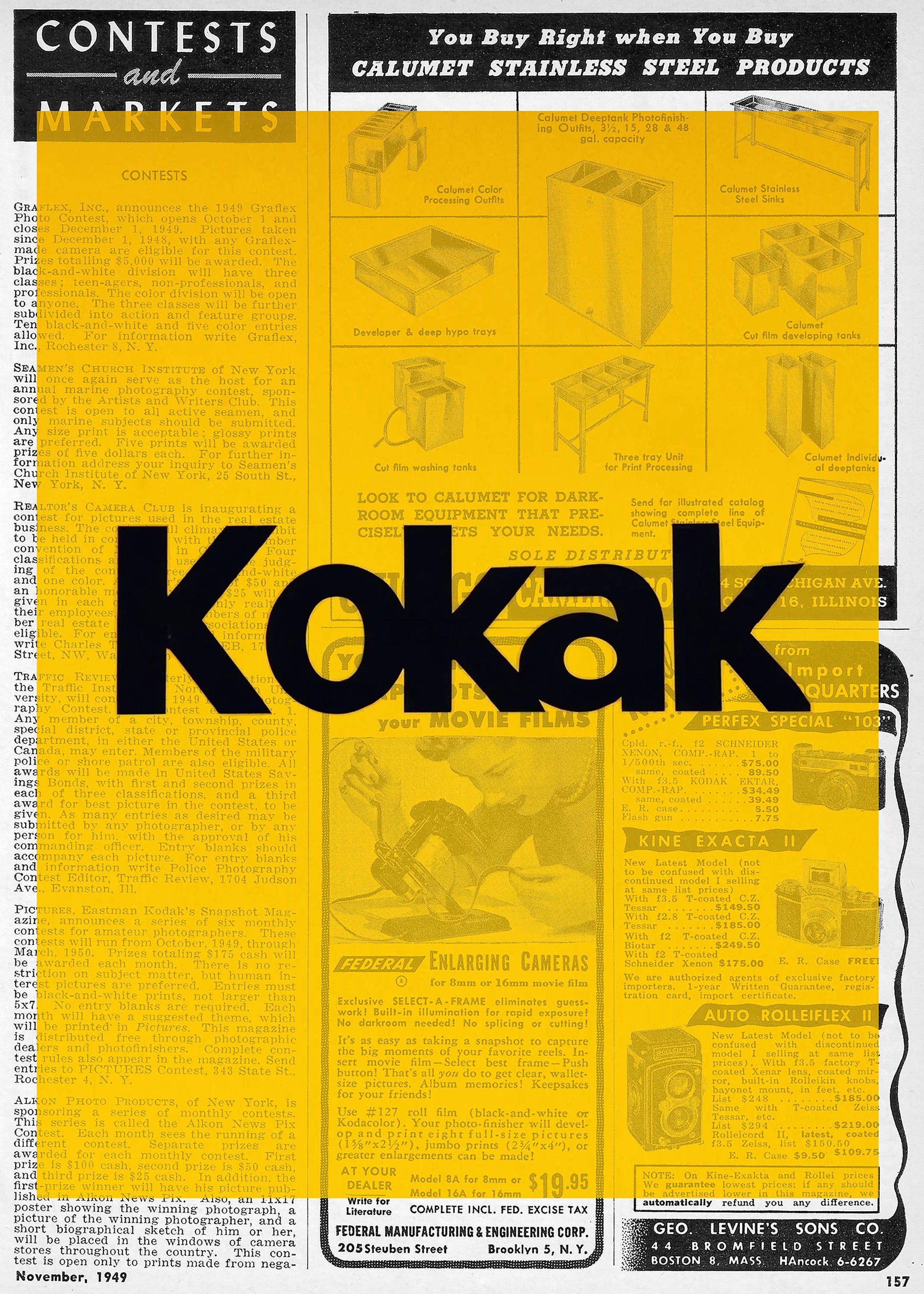
DE: Your most recent body of work 49/23 (2022-23), which employs AI generation. That project felt genuinely curious about AI as a material, if not warm to its possibilities. Can you speak to your concept and process, and reflect on how you’re feeling about this series now, a couple of years out?
GEJ: 49/23 is a project I developed shortly after all these AI image generators began to come online. For me, it was a way to think through the implications of these tools and what they represent within the larger photo-technological continuum.
It felt natural to me to use those tools to make photograph-looking images, but those pictures in themselves felt too easy and cheap to be regarded in any sense of importance. After a few months of thinking through how they could be used, I started scanning pages from 1943 issues of Popular Photography Magazine, and digitally overlaying these AI pictures on top of them.
For as early as the project was in this AI era, I still feel good about what it represents as work that comments on how photography has changed, as well as the metaphors many of the images represent about the relationships between the old medium and the new one.
It also felt like a project that simply needed to be made, and if I hadn’t, I’m sure another artist would have arrived at a similar conclusion. There still remain so many questions about what these AI tools mean for the future of photography, and it’s natural to me that this discourse should take place visually.
DE: You’ve spent over a decade building a support system for other people’s work: In the In-Between, Eddi Jones Projects, writing and editing for Fellowship, among other publications. We’re similar in this way, straddling both embodied and cerebral approaches to art-making and understanding. Can you tell me what these two modes offer you, be it economic, intellectual, or something else?
GEJ: I just like doing different things. All the art-making, writing, publishing, consulting, curating, etc., to me, having projects within these different arenas gives me new puzzles to solve. I’m easily bored and most of my days feel restless, so it feels more mandatory for me to find new challenges to work on.
I’ve also always enjoyed helping other artists, because, again, the worlds they are building offer me something new to explore. It’s all enriching in a way that’s like cerebral traveling. It lets me go to new places, access new thinking, etc.
Ultimately, all of it can be boiled down to spending my time in arenas that I enjoy, understand, and in which I feel that I can be useful.
DE: Also, I’m curious to hear what you’ve observed from other artists that you’ve worked with over, say, the last decade. In some ways, the work you did with In the In-Between was incredibly timely, predating what’s happening right now, but putting words to new modes of production in the photo community.
GEJ: It’s hard to say. I’ve worked with such a diverse range of artists, and I would be doing a disservice if I had to generalize. But if I had to, I think what I’ve observed is something that’s fundamental to most art-making, which is a search for new creative ground. With In the In-Between and my other explorations in photo-technological intersections, I think it’s interesting how new image tools are creating new terrain to explore.
This seems like a small part of a much larger and ongoing conversation about photography’s purpose and possibilities. Over its lifetime, the distances between the distinct eras of the medium’s identity have continually shrunk. The acceleration still has room to pick up more speed. It’s interesting to watch.
DE: This touches on the previous question a little, but I want you to speak more directly to the way you engage language and images, not just as a writer and critic, but as an artist who pulls in literary references into your visual work. I’m thinking of Promise Land (2018-21), but I don’t think that’s the only series that establishes a text-image connection in your practice.
GEJ: You’re right, though, to be honest, I don’t ever explicitly set out to make image-text works. I think the relationships are just a natural part of my interest, and I appreciate the extra dimensionality that texts provide in pictures.
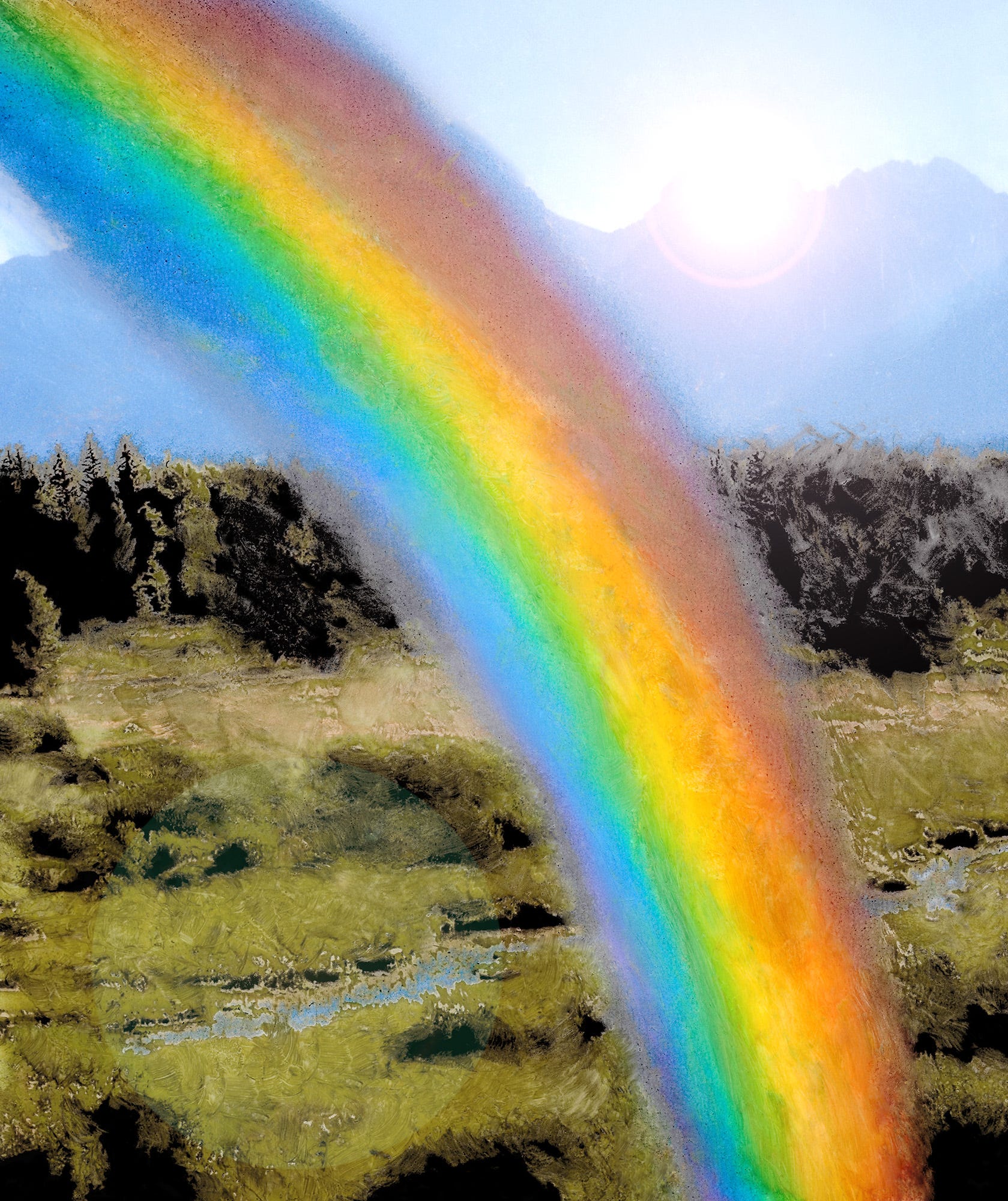
Promise Land is framed as a sort of visual update to T.S. Eliot’s poem The Wasteland. 49/23 contains the texts of camera ads and photography articles from Post-War America. Another 26 Gas Stations contains the textual errata of YouTube videos. I just think pictures are much more interesting when there is text that influences or competes with visual meaning projection.
DE: The way you describe your multi-hyphenate practice of art-making, writing, publishing, and consulting sounds genuinely nourishing. We’re very similar in this way, but I suspect our reasoning for arriving at this hybrid approach of working is different. I’m curious to hear what has led you down the path you have taken, and the economics of it. As artists, I think we all have to be creative in how we cobble together a life, and the extent we’re willing to look past our practices in service of that.
I ask because the photography ecosystem you’ve helped build has been severely disrupted, and I’m curious whether the consulting and support work through Eddi Jones Projects has grown or evolved partly as a response to that. But also, how important is it that your creative practice sustains you, and to what degree?
GEJ: I’ve never really expected my creative practice to sustain me, and there have certainly been some lean years to go along with the good ones. What I am to sustain overall is really my independence, and I’ve been fortunate to have been able to do that by staying flexible and embracing the hybridity. I think the lifestyle suits me, because I like doing lots of different things, be it writing or publishing or supporting other artists or organizations with marketing campaigns and book projects.
In many respects, photography’s ecosystem has been disrupted and fragmented, but the medium and its possibilities have never been so ripe. Just over the past decade, we’ve seen a true globalization of art photography. The medium is always refreshing itself, and so the conversations surrounding it never grow dull. The garden of photography is producing many rare and remarkable blooms, and I don’t think that will end anytime soon.
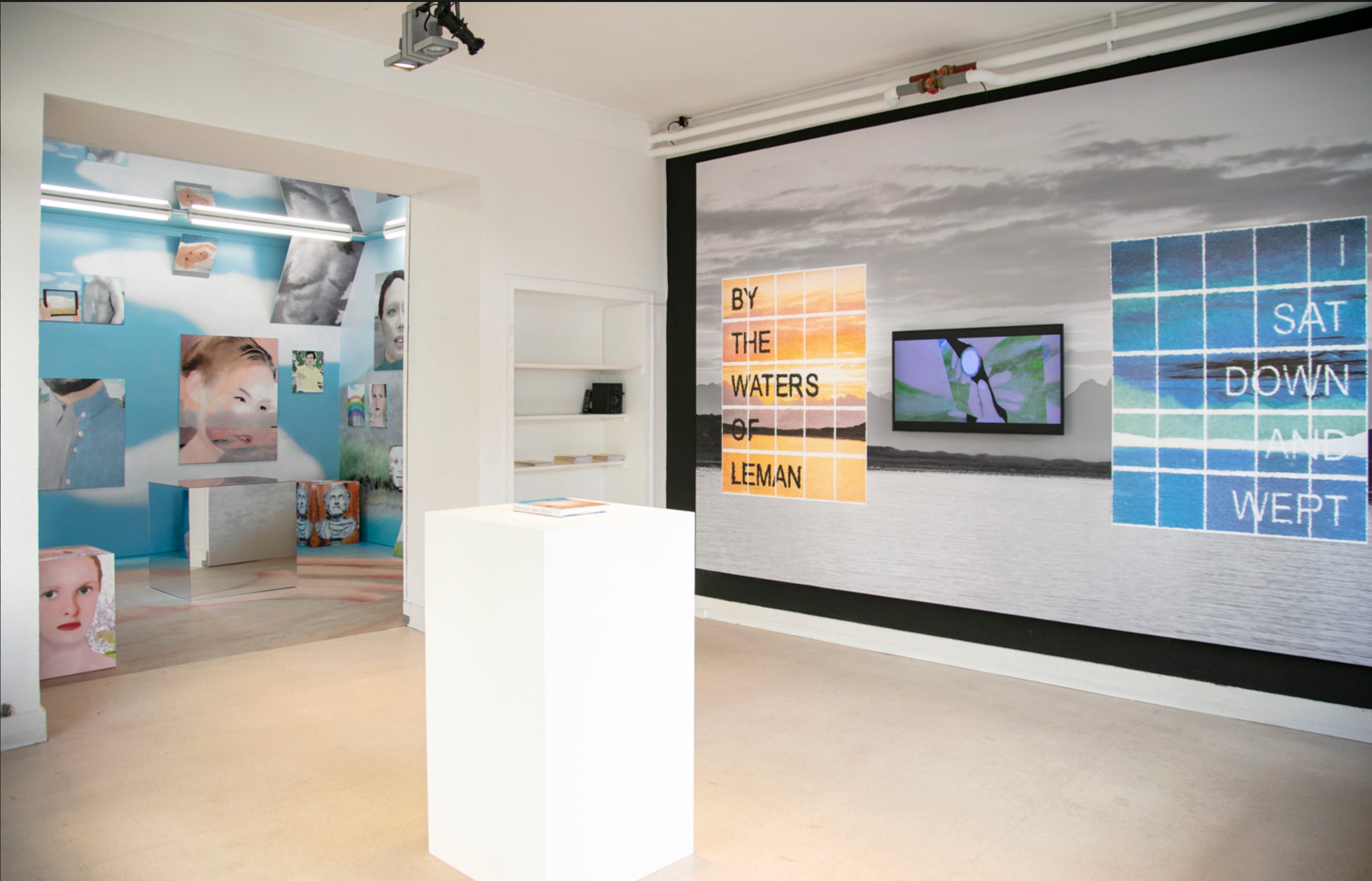
DE: On a similar note, what does your ideal life look and feel like as an artist/intellectual? How important is it that you contribute in the ways that you have up until this point?
GEJ: Just the freedom to explore curiosities, and to enjoy working on interesting things with interesting people. To me, it’s not about importance; it’s mandatory.
DE: I have a theory that good art requires some form of risk, which is to say that something emotional, physical, or intellectual needs to be on the line or engaged with to make something lasting. Your work has always felt like it carries something unique in that you seem to approach what you make with equal measures of curiosity as well as criticality, which is its own kind of risk. What does risk mean to you? Is it important personally or culturally?
GEJ: That’s a good question. I think risk for an artist means to make the types of things that haven’t been made before, while not having a clue if it will be accepted or not. But that’s also an artist’s job; to not recycle ideas that have been successful in the past, but to make new proposals for a culture to adopt. It’s difficult working in uncertainty, but I think if I were making work that I was sure would be popular or well-spoken off, I would probably be wrong.
DE: I read this essay yesterday about Gen Z living in the archive by Sam Buntz, where he feels like flattening of culture through platforms makes it hard for younger generations to create work (he mostly references music), because there’s a lack of linearity to inform how young artists absorb the work of previous generations. He argues that this anachronistic approach to understanding history and culture nets a generation of creative voices that respond in a way that is uniquely emblematic of this moment in time. I don’t know if I fully agree with his assessment, but he makes an interesting case for what is required for the next generation when it comes to making something new, and “not recycling”, as you say.
What do you think is your responsibility as an artist and writer engaging with technology, with all of the concerns, challenges, and affordances that come with engaging with it?
GEJ: I don’t think the onus of responsibility should be placed on artists/writers as much as those who are creating these tools to begin with, and the values they place on designing them. The motivations behind technological advancement aren’t that different from the technical evolutions of photography, which since the beginning have been at the service of achieving faster, cheaper, and easier means of making and distributing images.
If there’s any responsibility for individual users, I think it would simply be to understand and acknowledge the economic purposes of these tools, what they mean for the future of how we live, and, of course, not use them to harm others. At least that seems like the easy answer to me.
When new tools replace old orders with higher efficiency processes, there is something that we necessarily lose along the way. I think it has something to do with the romance of labor. When tech tools make tasks easier, it becomes harder to feel pride in labor.
If the present is any indication of the future, it’s hard to see a world where the concept of dignity exists if we remain consistently glazed over by a brain-rotting internet and rely on thinking machines to perform cognitive labor for us.
I don’t know, in this sort of world, what responsibility really means if not to live a life that actively avoids these social and behavioral rails that these enormous tech companies have been installing in us.